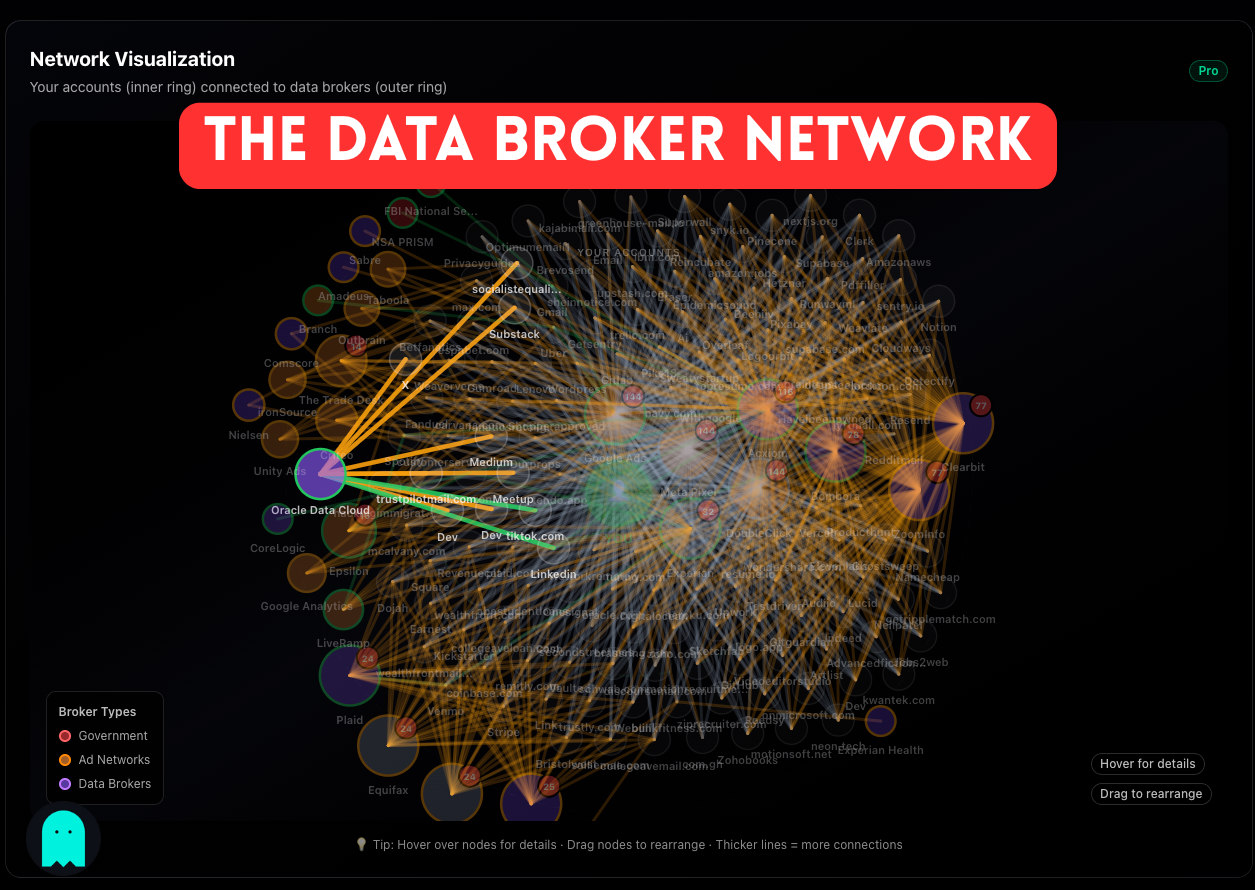
Most people have never heard of Acxiom, Epsilon, or CoreLogic. Yet these companies know more about you than your closest friends.
They know:
- Where you live (current and past addresses)
- What you buy (online and in stores)
- Your political views
- Your health conditions
- Your financial situation
- Who you're friends with
- Where you've been today
And they're selling this information. To advertisers, insurance companies, employers, landlords, and anyone else willing to pay.
Welcome to the world of data brokers.
What Are Data Brokers?
Data brokers are companies that collect, aggregate, and sell personal information about consumers. They operate mostly in the shadows—you've probably never interacted with them directly, yet they have detailed profiles on you.
The industry is massive. Worth over $200 billion annually, with the largest brokers maintaining files on hundreds of millions of people worldwide.
The top players include:
- Acxiom - Has data on 700 million consumers globally
- Epsilon - Processes 400+ billion transactions annually
- Experian - Yes, the credit bureau is also a data broker
- CoreLogic - Specializes in property and financial data
- Oracle Data Cloud - Tracks 5+ billion devices worldwide
And these are just the ones you might have heard of. There are 500+ active data brokers operating today.
How Data Brokers Get Your Information
You've never signed up for Acxiom. You've never given Epsilon permission to track you. So how do they have your data?
1. Public Records
Data brokers scrape public databases for:
- Property records (who owns what, purchase prices)
- Court records (lawsuits, divorces, bankruptcies)
- Voter registration (party affiliation, voting history)
- Business licenses
- Professional licenses
This is all legal. Public records are, well, public.
2. Purchase Data
Every time you use a loyalty card, the store sells your purchase history.
- Grocery stores know what you eat
- Pharmacies know what medications you take
- Retailers know your clothing sizes
- Gas stations know where you drive
This data is anonymized (supposedly), then sold to brokers who "re-identify" it by matching it with other data sources.
3. Website Tracking
Those cookie notices you click "Accept" on? You're agreeing to let the site share your data with "trusted partners."
Trusted partners = data brokers.
They track:
- Every page you visit
- How long you stay
- What you click on
- What you almost bought but didn't
- What device you're using
- Your location when you visited
4. Social Media
Your social media activity isn't just seen by your friends. Data brokers are watching too.
They analyze:
- Your posts and likes
- Who you follow
- What groups you join
- What ads you click
- Your relationship status
- Your interests and hobbies
Facebook, Twitter, LinkedIn—they all have data broker partnerships.
5. Mobile Apps
That free weather app? The flashlight app? The game you downloaded?
They're selling your:
- Location history (where you go, when, how often)
- Contact list
- Device information
- Usage patterns
A study found that the average smartphone shares data with 10+ third parties without user knowledge.
6. Data Breaches
When a company gets hacked and user data leaks, where does that data go?
Data brokers buy it.
They purchase leaked databases from:
- Hacked websites
- Stolen email lists
- Compromised forums
- Breached services
Then they match that data with their existing profiles to fill in gaps.
7. Account Creation
Remember that account you created in 2011? That forum you joined? That free trial you signed up for?
You forgot about it. They didn't.
When companies go bankrupt, they sell their user databases to cover debts. Your account data becomes an asset in bankruptcy proceedings.
The average person has 67 forgotten accounts. Most think they have around 20.
Every one of those accounts can (and probably will) sell your data.
What Data Brokers Know About You
Data brokers don't just have your email address. They have detailed profiles that include:
Basic Demographics
- Name, age, gender
- Home address (current and previous)
- Phone numbers (mobile and landline)
- Email addresses
- Marital status
- Number of children
- Education level
Financial Information
- Income range
- Credit score
- Property ownership
- Mortgage details
- Loan history
- Investment activity
- Bankruptcy filings
Purchase Behavior
- Shopping habits
- Brand preferences
- Average transaction size
- Online vs. in-store shopping
- Product categories you buy
- When you typically shop
Health Data
- Prescription medications
- Medical conditions
- Insurance status
- Gym memberships
- Fitness tracker data
- Mental health indicators (inferred from behavior)
Political & Social
- Voting history
- Party affiliation
- Causes you support
- Organizations you belong to
- Religious affiliation (inferred)
Location & Behavior
- Places you visit regularly
- Your daily commute
- Vacation destinations
- How often you travel
- Your typical schedule
Digital Footprint
- Websites you visit
- Content you consume
- Apps you use
- Social media activity
- Device types
- Internet provider
They combine all of this into a single profile. One record with hundreds of data points about you.
How Your Data Gets Sold
Data brokers don't sell your individual profile to some random person. The business model is more sophisticated than that.
Targeted Advertising
Advertisers buy access to specific audiences:
- "Women aged 25-34 who recently searched for engagement rings"
- "Homeowners earning $100K+ interested in solar panels"
- "People who visited a competitor's website in the last 30 days"
Data brokers provide the targeting. Your information makes these ads possible.
Risk Assessment
Insurance companies, lenders, and employers use data broker profiles to assess risk:
- Should we insure this person?
- What interest rate should we offer?
- Is this person a good hire?
They're making decisions about you based on data you never provided.
Direct Marketing
Companies buy mailing lists for direct mail campaigns:
- Catalogs
- Credit card offers
- Political mailers
- Sweepstakes entries
Ever wonder why you get specific junk mail? Data brokers.
People Search Sites
Sites like Spokeo, Whitepages, and BeenVerified get their data from... data brokers.
For $20, anyone can look you up and find:
- Your address
- Your phone number
- Your relatives
- Your age
- Your property value
All perfectly legal.
The Real-World Impact
This isn't just about getting annoying ads. Data broker practices have serious consequences:
Discrimination
Studies have shown data brokers creating categories like:
- "Ethnic Second-City Strugglers"
- "Rural and Barely Making It"
- "Tough Start: Young Single Parents"
These categories are then used to target (or exclude) people from:
- Job opportunities
- Housing listings
- Credit offers
- Educational programs
This is redlining in the digital age.
Price Discrimination
Companies use your data to show you higher prices:
- Orbitz showed Mac users more expensive hotels
- Staples charged different prices based on location
- Amazon tested personalized pricing
They know what you can afford. They charge accordingly.
Identity Theft
The more data about you that exists in databases, the easier it is for criminals to impersonate you.
Data breaches at brokers have exposed:
- Social Security numbers
- Dates of birth
- Mother's maiden names
- Security question answers
Everything needed to steal your identity.
Stalking & Harassment
People search sites powered by data brokers make it easy to:
- Find someone's address
- Track their movements
- Discover their routine
Domestic violence survivors, journalists, and activists are particularly vulnerable.
What Laws Protect You?
The answer depends on where you live.
California (CCPA/CPRA)
California residents have the right to:
- Know what data is collected about them
- Request deletion of their data
- Opt-out of data selling
- Sue companies for data breaches
Data brokers must comply with these requests within 45 days.
European Union (GDPR)
GDPR is even stronger:
- Right to access your data
- Right to deletion ("right to be forgotten")
- Right to data portability
- Explicit consent required for data collection
Violations can result in fines up to 4% of global revenue.
Other States
Virginia, Colorado, Connecticut, and Utah have passed privacy laws similar to California's. More states are following.
Federal Level
The U.S. has no comprehensive federal data privacy law.
There's no federal requirement for data brokers to:
- Tell you what data they have
- Let you delete your data
- Get your permission before collecting
This is changing slowly, but for now, data brokers operate mostly unchecked.
How to Protect Yourself
You can't completely avoid data brokers, but you can reduce your exposure.
1. Find Your Forgotten Accounts
The average person has 67 forgotten online accounts. Each one is a data source for brokers.
What to do:
- Scan your email for account creation emails
- Search for "welcome," "confirm your email," "account created"
- Make a list of accounts you no longer use
- Delete them
Tools like GhostSweep automate this process—scanning your email to find every account tied to your address.
2. Opt-Out of Major Data Brokers
You can request deletion from major brokers:
Top brokers to opt-out from:
- Acxiom: acxiom.com/optout
- Epsilon: epsilon.com/privacy
- Oracle: oracle.com/legal/privacy/marketing-cloud-data-cloud-privacy-policy.html
- Experian: experian.com/privacy
- LexisNexis: lexisnexis.com/privacy
Note: This is tedious. Each broker has a different process. Some require phone calls. Some require notarized letters.
3. Remove Yourself from People Search Sites
Request removal from:
- Spokeo
- Whitepages
- BeenVerified
- PeopleFinder
- Intelius
Warning: New sites pop up constantly. This is an ongoing battle.
4. Use Privacy Tools
Browser:
- Privacy Badger (blocks trackers)
- uBlock Origin (blocks ads and tracking)
- Firefox with enhanced tracking protection
Search:
- DuckDuckGo (doesn't track searches)
- Brave Search (private by default)
Email:
- Apple Hide My Email
- SimpleLogin
- Use unique emails for each service
Mobile:
- Review app permissions regularly
- Disable location services for unnecessary apps
- Use a VPN
5. Be Mindful of What You Share
Before posting, buying, or signing up:
- Do you really need an account?
- Can you use a temporary email?
- Do you have to provide your real phone number?
- Is this company reputable?
The less data you create, the less data brokers can collect.
The Future of Data Brokers
The data broker industry is at a crossroads.
Growing regulation:
- More states passing privacy laws
- Potential federal legislation
- Increased scrutiny from regulators
Consumer awareness:
- People are learning about data brokers
- Demand for privacy tools is rising
- Class action lawsuits are increasing
Technical changes:
- Cookie deprecation
- App tracking transparency (iOS)
- Browser privacy features
But the industry is adapting:
- Moving to "privacy-preserving" technologies
- Rebranding as "data enrichment" companies
- Finding new ways to track without cookies
The cat-and-mouse game continues.
Taking Back Control
You can't stop data brokers entirely. But you can make their job harder.
Start with the basics:
- Find and delete forgotten accounts
- Opt-out of major data brokers
- Remove yourself from people search sites
- Use privacy tools
- Be mindful of what you share
It's not about perfection. It's about reducing your exposure.
Every account you delete is one less data source. Every opt-out request is one less profile. Every privacy tool is one more barrier.
Your data has value. Stop giving it away for free.
Want to see your own digital footprint? GhostSweep scans your email to find every forgotten account—then shows you how to delete them. Free to try, 2 minutes to scan.